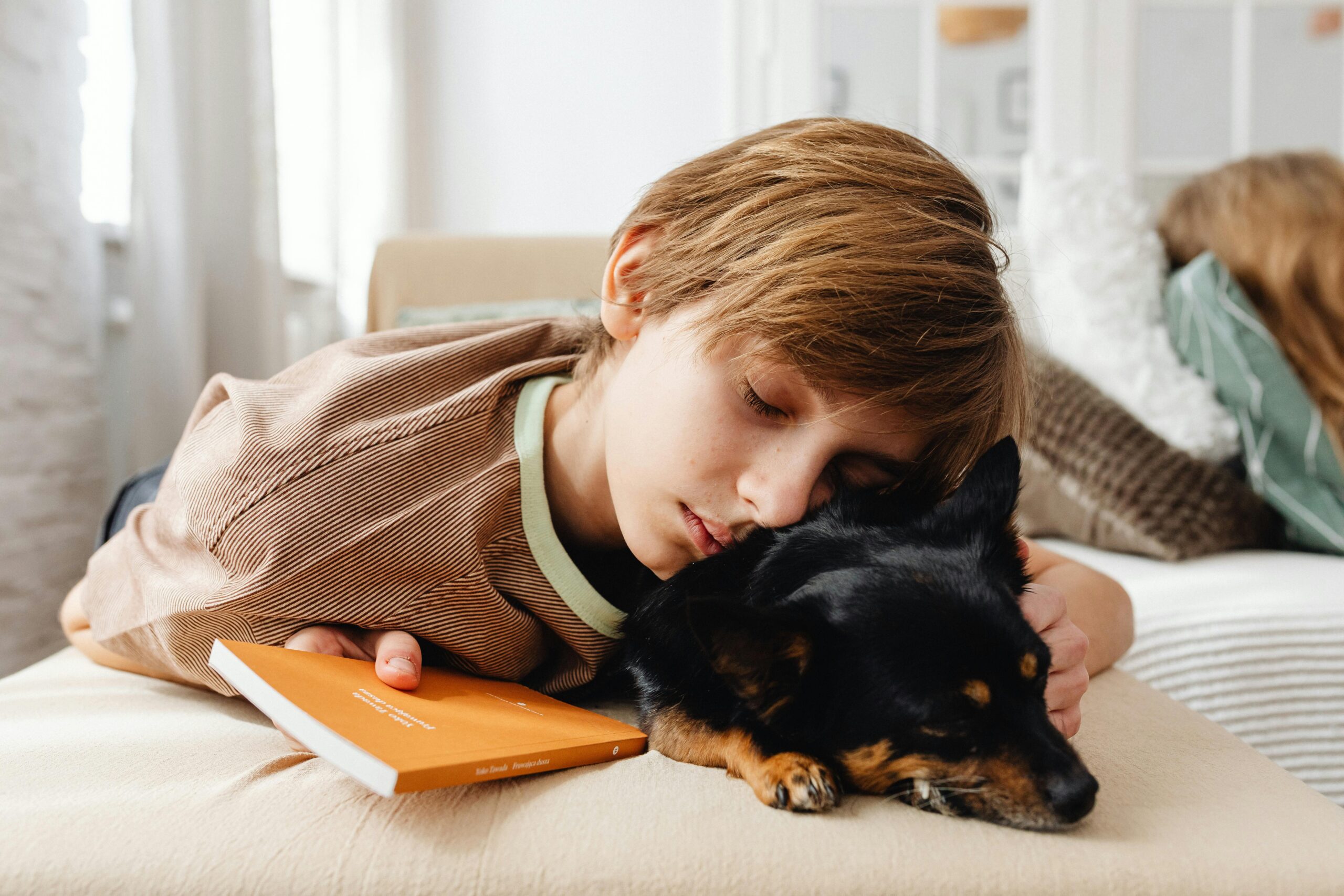
10 Life Skills Children Can Learn from Being with a Dog
Spending time with a dog offers more than fun and affection—it becomes a powerful way for children to grow emotionally, socially, and practically. Through caring for and connecting with a dog, children learn meaningful lessons that stay with them throughout life.
1. Empathy
What: Understanding and responding to the emotions of others.
How: Dogs communicate through body language and behavior. When children notice signs of stress, joy, fear, or calm in a dog and adjust their actions accordingly, they are practicing emotional attunement.
Why: This helps children develop compassion—not only for animals but also for other people—by learning to listen with more than just words.
2. Responsibility
What: Taking ownership of daily duties and follow-through.
How: Feeding, brushing, walking, and training a dog all require consistency and attention. When children help with these tasks, they begin to understand that living beings depend on them.
Why: This builds a strong sense of duty and reliability, helping children gain confidence and maturity.
3. Emotional Regulation
What: Managing big feelings in a healthy way.
How: A calm, nonjudgmental dog provides children with emotional safety. Simply being near a dog, or stroking its fur, can help reduce anxiety, anger, or sadness.
Why: Children learn that emotions are okay—and that there are gentle ways to find calm. This builds lifelong resilience and inner strength.
4. Communication Skills
What: Reading nonverbal cues and sending clear messages.
How: Dogs respond to tone of voice, posture, gestures, and facial expression. Children quickly learn that unclear or inconsistent signals don’t work—and that attention, eye contact, and body language matter.
Why: These lessons transfer to human relationships, especially for children who struggle with social communication.
5. Problem Solving
What: Thinking flexibly and adapting to challenges.
How: Whether it’s figuring out how to stop a dog from barking or teaching it a new command, children must observe, experiment, and adjust their strategies.
Why: These experiences encourage creative thinking and persistence—key skills in school and life.
6. Patience
What: Learning that growth and learning take time.
How: Dogs don’t learn a new trick in one day. Children see that consistency, kindness, and repetition are necessary—and that frustration can be managed.
Why: Patience is essential for academic learning, relationships, and emotional development.
7. Self-Esteem and Worth
What: Feeling valued and accepted.
How: Dogs don’t judge. They love unconditionally, which helps children feel safe being themselves—especially those who feel “different” or left out in other settings.
Why: This acceptance builds a core sense of self-worth, which is the foundation for confidence and emotional wellbeing.
8. Understanding Life and Loss
What: Appreciating life and coping with endings.
How: Taking care of a living creature teaches children to nurture, protect, and appreciate. If a dog gets sick or dies, children also learn about grief and the natural cycles of life.
Why: These experiences develop emotional depth, empathy, and the ability to cope with change and loss.
9. Healthy Routines
What: Gaining structure and predictability.
How: Dogs thrive on routine—set times for meals, walks, and sleep. Children who help with a dog’s care begin to organize their own time as well.
Why: Predictable routines create a sense of safety, especially for children who need clear frameworks in daily life.
10. Love and Loyalty
What: Experiencing deep, trusting bonds.
How: Dogs offer pure affection and dependability. When children care for and connect with a dog, they experience love that is consistent and unconditional.
Why: These relationships help children build trust in others and understand the importance of loyalty and kindness in friendships and family life.
It is essential to remember that adults must always hold the main responsibility for the dog’s care and well-being. Adults are also responsible for guiding the interaction between child and dog to ensure safety, support learning, and promote healthy development. With the right adult support, time spent with a dog can become not only safe and meaningful—but truly transformative for a child.
Being with a dog can provide children with a rich learning experience that extends far beyond simply having a pet. It offers invaluable opportunities for personal growth, the development of social skills, and a deeper understanding of responsibility and empathy. The lessons learned from this unique relationship can shape children into compassionate and responsible individuals as they navigate life.