What is target training?
Target Training
In dog training, targeting is a method where the dog learns to touch or move toward a specific object using a specific part of its own body, such as the nose, paw, or chin. This technique is widely used because it fosters clear communication, helps teach both simple and advanced behaviors, and keeps the dog positively engaged and focused. It’s both fun and effective, and it can be used to teach a wide variety of skills, tricks, games, and exercises.
How Targeting Works
Targeting can be used in many ways depending on your training goals. You can combine:
- The body part the dog uses – nose, paw, chin, chest, side, etc.
- The object or area the dog touches – hand, marker, mat, wall, platform, etc.
Target training isn’t just about what the dog targets—it’s also about how they use their body. By thoughtfully combining different target types and body parts, you can shape behaviors for practical tasks, dog sports, cooperative care, or just for fun.
Target training helps build focus, confidence, communication, and provides a great way to make training sessions enjoyable and meaningful for both dogs and humans.
Useful Types of Targeting
🐾 Nose Target
The dog touches an object—such as your hand or a small marker—with its nose. This is the most commonly used type of targeting and is great for guiding movement, building engagement, and teaching directional cues.
🐾 Paw Target
The dog places one or both paws on an object like a mat, block, or platform. This type is useful for teaching tricks like high-fives, paw waves, pressing buttons, or learning precise placement in dog sports.
🐾 Chin Target
The dog gently rests its chin on an object or a person’s hand, promoting stillness and calm. Commonly used in cooperative care and veterinary handling training.
🐾 Other Body Targets
The dog uses other parts of its body—such as the chest, back, or side—to lean on or touch an object. For example, pressing the back against a person’s leg or lying belly-down on a mat. These are especially helpful for advanced skills, calming behaviors, or service dog tasks.
There are many creative ways to use targets in training. The examples below highlight commonly used approaches, but keep in mind—targeting can be adapted to suit your individual training goals.
Examples of Common Target Types
- Target in hand
The handler’s hand acts as the target for the dog’s nose. This builds attention, connection, and is often the very first target introduced. - Target Stick
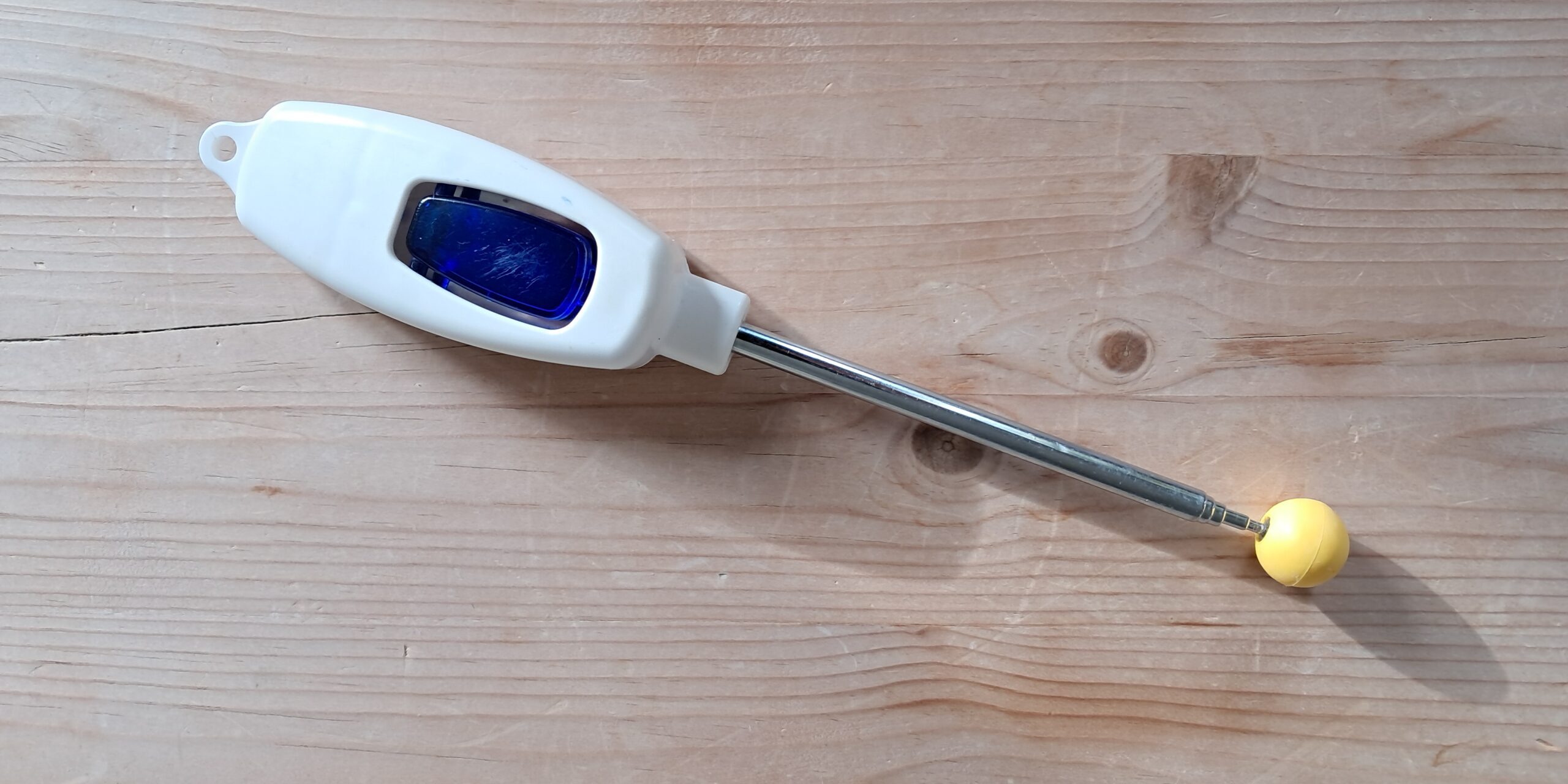
A stick with a small ball or disc at the end, used to guide the dog’s movement by having them follow and touch it. Ideal for shaping behaviors or teaching tricks at a distance. - Target Mat / Station
A mat, towel, or surface the dog is trained to go to and stay on. Useful for teaching impulse control, relaxation, or “go to place” cues. - Object Targeting
The dog interacts with specific objects like cones, toys, buttons, or platforms. This is great for tricks, agility, scent games, or service dog work. - (Human) body Targeting
The dog is trained to press or position part of its body (shoulder, hip, side) against an object or person. This is often used in service dog tasks such as deep pressure therapy or mobility support. - Visual Targets
Stickers, markers, or tape on the floor used as visual cues. Dogs can be taught to move to, stand on, or direct certain body parts toward the target. Frequently used in heelwork, canine freestyle, and movement-based tasks.
Why Train Your Dog with Targets?
- Clear Communication
Targets act as clear training landmarks, helping the dog understand what to do and where to go. - Builds Focus and Calm
Especially helpful in distracting environments or for reactive and excitable dogs. - Promotes Positive Learning
Success is rewarded, which boosts the dog’s confidence and enjoyment of training. - Foundation for Advanced Skills
Many complex behaviors—such as turning on lights, going to specific locations, or mobility assistance—are built from simple targeting exercises.
In Summary
Target training is a flexible and effective tool that can be adapted to suit many different dogs, goals, and training styles. Whether you're helping a puppy learn basic focus, building complex service tasks, or simply adding fun to your dog’s routine, teaching your dog to follow a target is a valuable way to build connection, strengthen communication, and develop new skills together. Target training is highly versatile and can be applied across a range of contexts—from basic obedience to advanced tricks—enhancing both the training experience and the bond between dog and handler.
When the dog performs a target behavior, the target can either be the skill itself—such as placing its belly on a mat in the dog bed—or it can be a tool used to teach other skills. For example, a “paw target pad” in your hand can help the dog learn to give a high five. Once the dog understands that it should place its paw where the pad is, the pad can gradually be removed.
To make target training clearer and more effective, it can be helpful to teach your dog to associate specific target objects with different body parts. For instance:
🐾 A plastic tag = paw target
🐾 A piece of cloth = nose target
🐾 A small mat = belly target
These learned associations can then be used to teach new behaviors, tricks, and routines more easily.