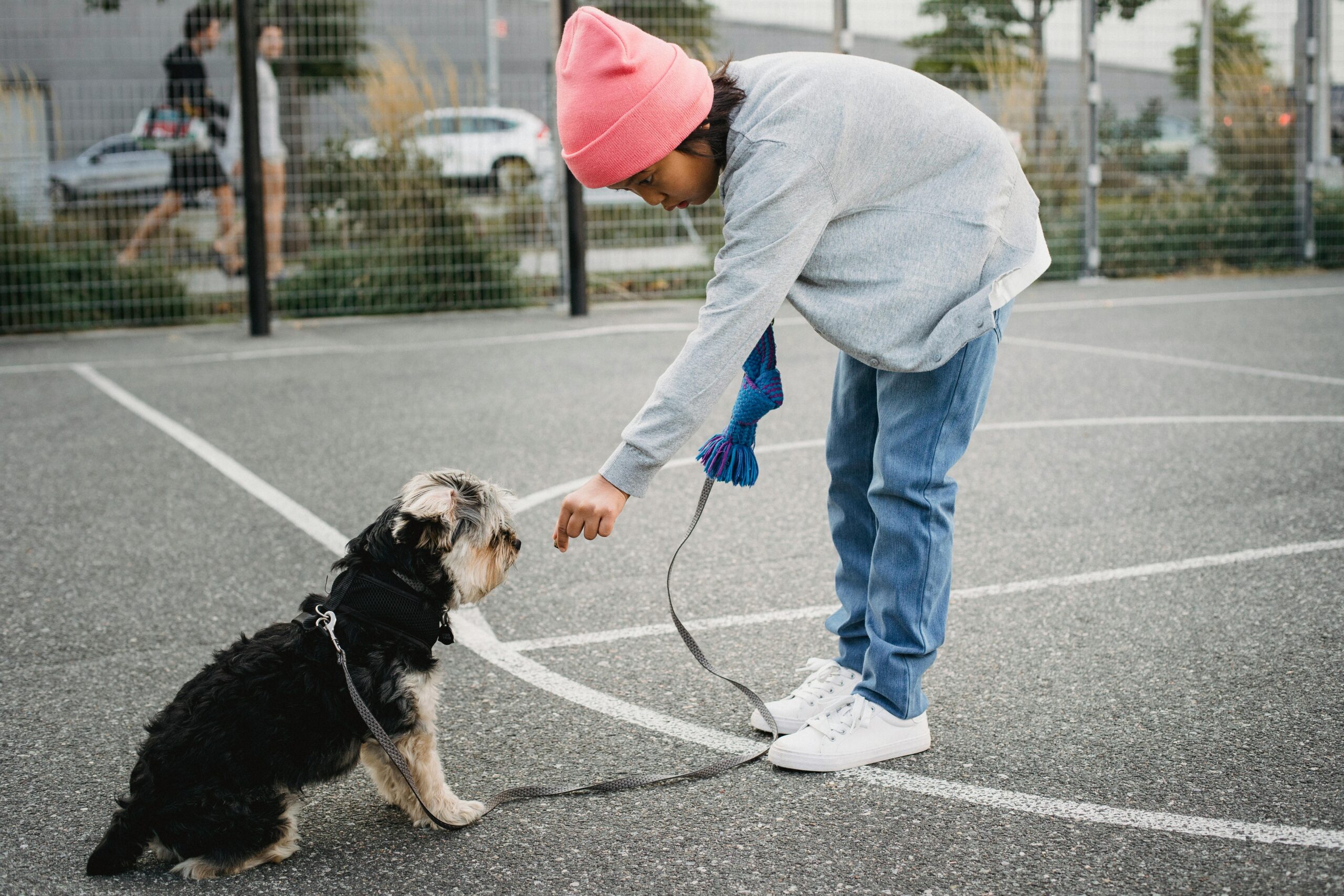
IDog-assisted interventions have increasingly been explored as involving dogs as supportive companions for children who need opportunities to practise language, social communication, and interaction skills. Rather than replacing educational or therapeutic instruction, dogs are typically included to help create emotionally safe, motivating, and socially meaningful contexts for practice.
Below is a structured overview of three high-quality, open-access research articles that specifically examine how interaction with dogs may support verbal and non-verbal communication, social engagement, and interaction skills in children.
Overall conclusion
Across these studies, interaction with dogs appears to support language and social communication by:
-
encouraging active verbal and non-verbal communication
-
supporting joint attention and social engagement
-
reducing stress and increasing motivation in interaction-based tasks
The research consistently emphasizes that dogs function best as supportive companions within well-planned, ethical, and child-centered interventions, rather than as standalone treatments.
1. Enhancing social communication behaviors in children with autism:
The impact of dog training intervention on verbal and non-verbal behaviors
Polak-Passy, Ben-Itzchak & Zachor (2024)
Frontiers in Psychology – Open access
 Full text:
https://www.frontiersin.org/journals/psychology/articles/10.3389/fpsyg.2024.1496915/full
Type of study
Intervention study using structured dog-training activities with children with autism.
Focus
- Verbal communication (commands, vocalizations)
- Non-verbal communication (eye contact, gestures, facial expressions)
- Joint attention and social engagement
Key findings
- Increases in child-initiated verbal and non-verbal communication during interaction with the dog.
- Improvements in joint attention and communicative gestures.
- Reduction in some challenging or repetitive behaviors during sessions.
- Mixed results across some social measures, highlighting the importance of careful interpretation.
Relevance for practice
This study provides direct evidence that structured interaction with a dog can support active practice of social communication skills, making it highly relevant for language-focused and interaction-based interventions.
2. Animal-Assisted Interventions With Dogs in Special Education Settings:
A Review of the Literature
Meixner & Neumann (2022)
Frontiers in Psychology – Open access
Full text:
https://www.frontiersin.org/articles/10.3389/fpsyg.2022.866294/full
Type of study
Narrative review of dog-assisted interventions in special education contexts.
Focus
- Social interaction and communication
- Emotional regulation and engagement
- Learning readiness in children with additional needs
Key findings
- Dog-assisted interventions are often associated with increased social interaction, including more spontaneous communication.
- Dogs may act as social catalysts, facilitating interaction between children and adults or peers.
- Effects on language and communication are often indirect, mediated through increased engagement and emotional safety.
Relevance for practice
This review supports the idea of dogs as context-builders that enable meaningful communication practice, particularly for children who find social interaction challenging.
3. Animal-Assisted Therapy for Children and Adolescents With Autism Spectrum Disorder:
A Systematic Review
O’Haire (2017)
Journal of Autism and Developmental Disorders – Open access via PMC
Full text:
https://pmc.ncbi.nlm.nih.gov/articles/PMC5400271/
Type of study
Systematic review of animal-assisted interventions, including dog-assisted approaches.
Focus
- Social communication
- Social engagement and interaction
- Emotional and behavioral regulation
Key findings
- Many studies report increased social interaction and social communication behaviors when animals are involved.
- Children often show more initiated interaction, shared attention, and communicative intent in animal-assisted contexts.
- Methodological quality varies, and effects are best described as supportive rather than curative.
Relevance for practice
This review provides a broad evidence base showing that interaction with animals, including dogs, may support social and communicative development in children with autism and related challenges.